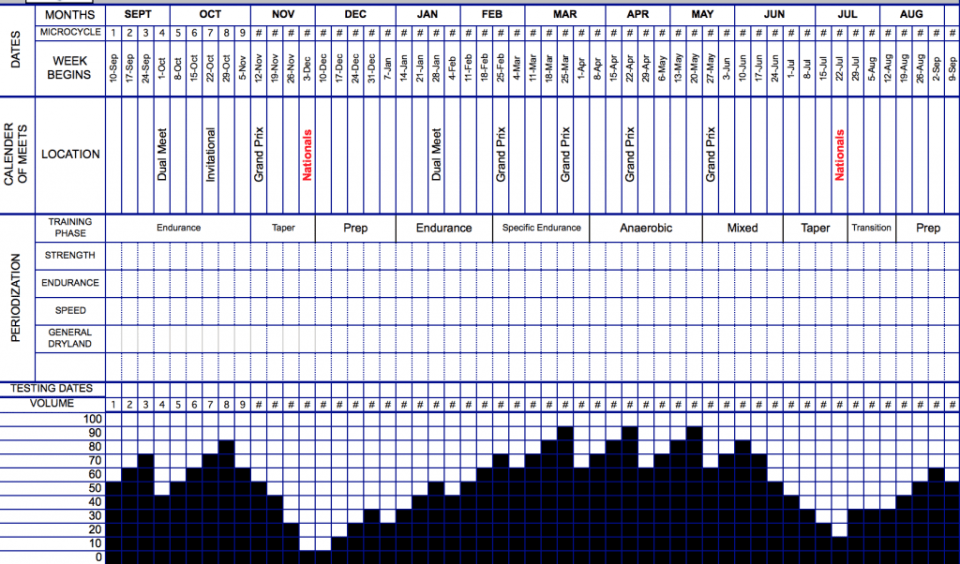
Periodization
a fancy word for mixing it up
If you have been swimming with the Tankers for a few years, you will remember that the first few weeks of each season is dedicated to drill progressions and mindful swimming. It is Tim’s hope that everyone, from competitive to triathlete to fitness swimmers, will start off their training season conscious of stroke technique and with an eye toward goal setting for the year.
This year it may be premature to begin planning our swimming season just yet. With most pools closed and most swimming competitions delayed, this year’s “season” may be more about athletes maintaining their fitness by swimming wherever they can. Gone for a while are carefully planned workouts designed to maximize training and prepare for competition. However, when the pools finally open and we get back to training, you can be sure we will be chomping at the bit and ready to go! Until then, dream and take the time to read about the idea of periodization and the structuring of a swimmer’s season. Thank you Tom for this contribution from the good folks at SwimPro:
—————-
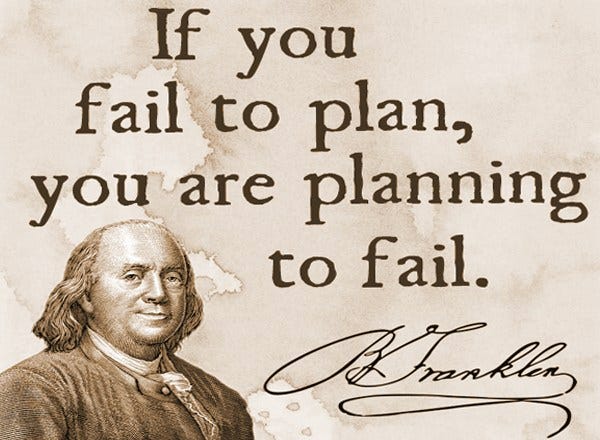
The success of a season starts with planning! Whether you’re a coach or athlete, it’s important to plan the season with the desired end results in mind. It can be difficult to think long-term, but as the quote goes:
Building a successful yearly training plan starts with periodizing training around major competitions. Once you’ve mastered this process, you’ll be that much closer to achieving your goals!
What is Periodization?
Periodizing an exercise program aims to optimize training during short (weeks, or months) as well as long periods of time (years, or an athletic career) to produce maximum gains in physical performance. The goal of periodization is to be able to achieve peak performance at a particular time, such as at a major competition at the end of the season.

Structuring The Season
• Macrocycles are seasonal or a year-long plans. First determine the date of the key competition where a peak performance is desired. The season could be a year in length, six months in length or as with some high school seasons, only 10 weeks in length.
• Mesocycles are training periods of approximately six to eight weeks. An effective training period allows a swimmer to benefit from adaptations of the body that are a result of training. As a general rule of thumb, the body will need roughly six weeks to make significant physical and chemical changes in its ability to provide energy to the muscles.
• Microcycles are generally weeklong training periods, but can range from 4-10 days in length. Determine what the training emphasis will be in each training block. This does not mean that ONLY one specific type of work will be done; however, this will be the training emphasis during that training block. Plan each week’s emphasis, then plan what will be emphasized each day, each practice. Don’t forget to plan rest and recovery into the schedule.
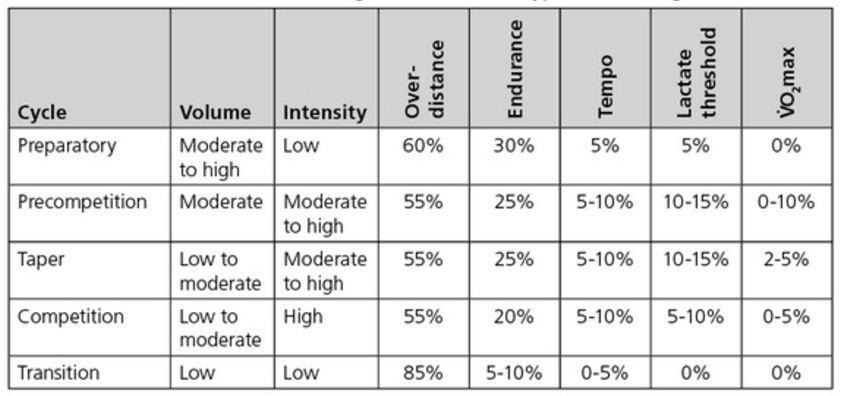
Keep in mind that there are no real boundaries or borders between blocks or cycles. All changes of training emphasis should be gradual. The four Meso Cycles below are typical of one Macro Cycle!
1. General Preparation
2. Specific Preparation
3. Competition Phase
4. Transition Phase
The Science Behind Periodization!
• Intensity – how much effort is being applied in sets (energy zones)
• Load Density – how much swimming is done in a period of time (EX: 1,000meters/15minutes of training)
• Load Volume – total amount of work done in a measured time frame (total distance)
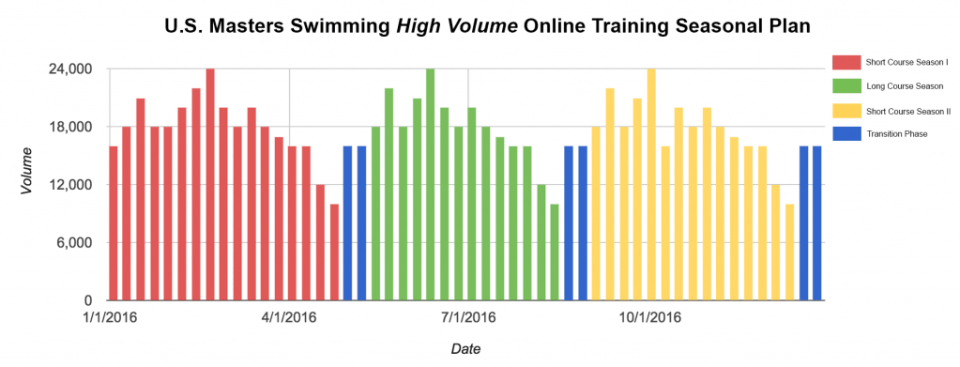
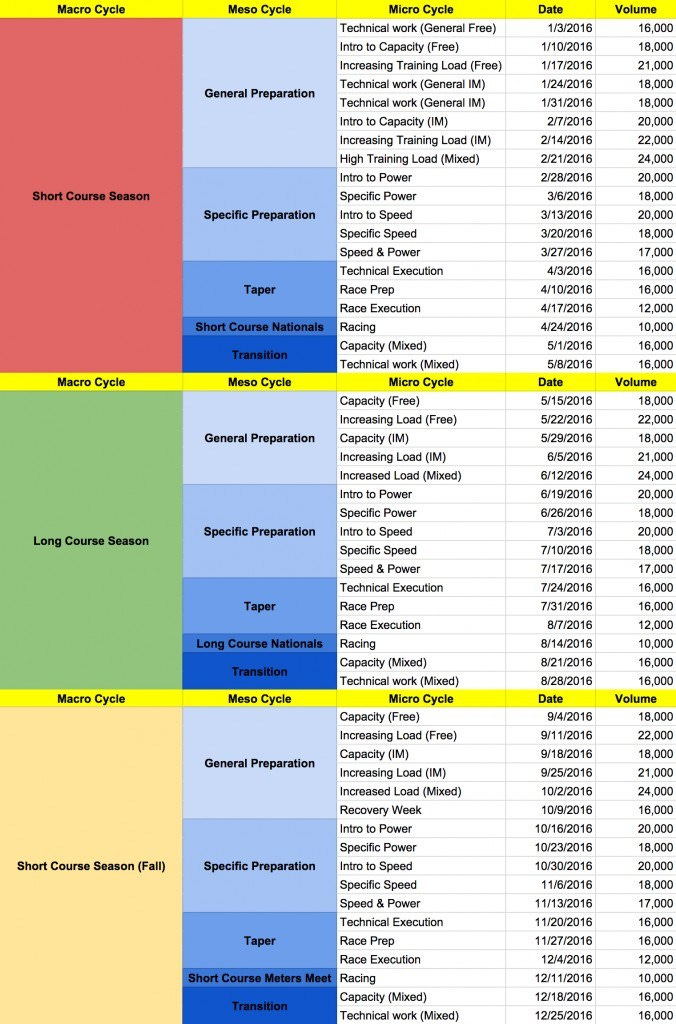
U.S. Masters Swimming High Volume Periodization Example
U.S. Masters Swimming offers its members exclusive access to online workouts in seven unique training categories. As the high-volume coach responsible for creating weekly workouts through 2016, I approached the season with three championship meets in mind: Short Course Nationals (April), Long Course Nationals (August), Short Course Meet (December).
Execute and Evaluate The Past Season
Be sure to checkout this presentation on season planning by Rick Bishop. It’s a great resource for coaches and swimmers who are looking to maximize their training potential!
We’d love to hear about your goals. How do you structure each season?